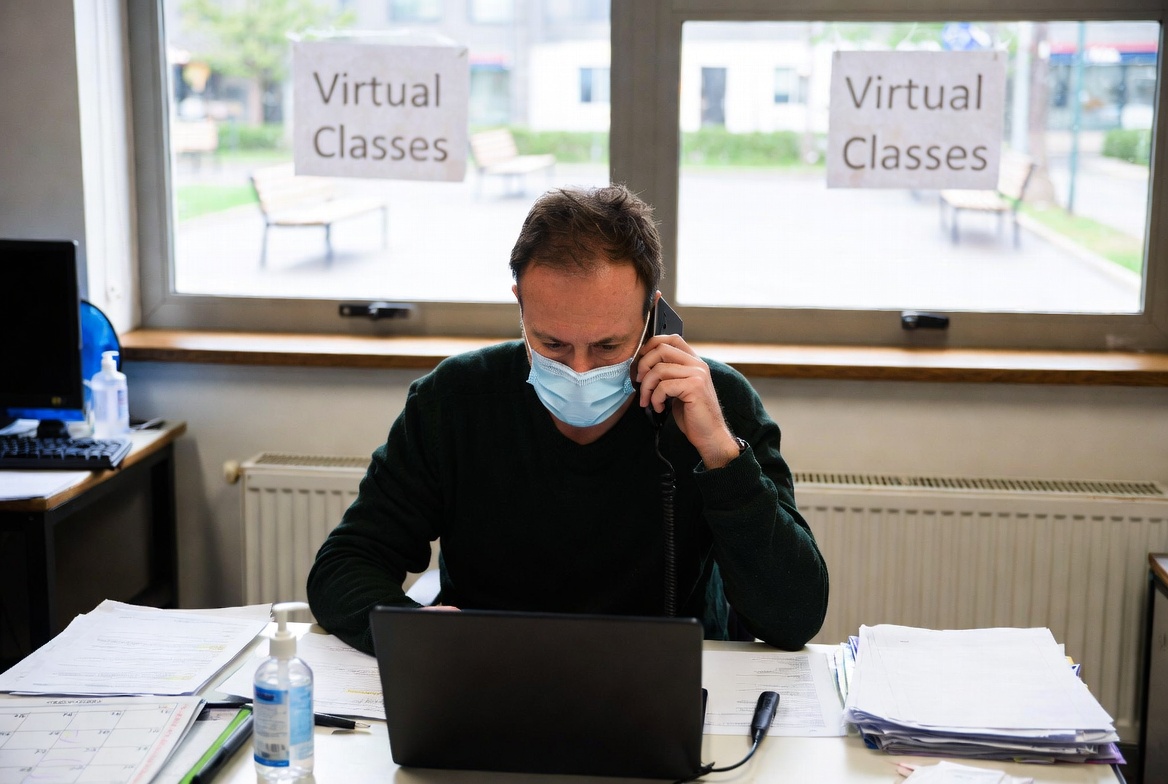
When schools closed their doors in response to a rapidly spreading virus, educational leaders found themselves navigating territory for which nothing in their training or experience had prepared them. Within days, they needed to transform centuries-old educational models, shifting from in-person instruction to remote learning while maintaining connections with students, supporting overwhelmed teachers, and reassuring anxious families. The COVID-19 pandemic represented the most significant disruption to education in generations, testing the capacities of school leaders at every level and revealing both the vulnerabilities and the resilience of educational systems worldwide.
The challenges were immediate and practical. How do you teach students who lack internet access at home? How do you support teachers who have never used online platforms? How do you feed children who depend on school meals? How do you address the mental health needs of students isolated from their peers? These questions had no precedent in educational leadership manuals, yet they demanded answers within hours and days.
Beyond the practical challenges, the pandemic forced educational leaders to grapple with fundamental questions about the purpose and nature of schooling. When buildings closed, what remained of education? What were schools actually for, and how could those purposes be served under radically different conditions? The crisis revealed assumptions that had gone unquestioned and created space for reimagining what education might become.
The Immediate Crisis Response
The initial phase of the pandemic required rapid decision-making under extreme uncertainty. Educational leaders had to close schools before the full scope of the threat was understood, with limited information about transmission rates, health risks, and appropriate responses. These decisions carried enormous consequences for student learning, family logistics, and community health.
Effective leaders during this phase prioritized communication and transparency. They acknowledged what they did not know while sharing what they did know. They established regular channels for updating families and staff, recognizing that silence created space for rumor and anxiety. They made themselves available for questions, even when they lacked definitive answers.
The logistical challenges were staggering. Leaders had to distribute technology to families who lacked devices, establish meal distribution systems for students who depended on school food, and create entirely new approaches to instruction within days. This required mobilizing resources, coordinating with community partners, and making countless operational decisions under pressure.
Perhaps most challenging was the emotional dimension of crisis leadership. School leaders had to project confidence and calm while themselves experiencing fear and uncertainty. They had to support grieving communities while managing their own stress and that of their staff. The pandemic demanded emotional intelligence and resilience that went far beyond typical administrative competencies.
Leading Through Uncertainty
As the initial crisis phase extended into months and then years, educational leaders faced the challenge of sustaining their organizations through prolonged uncertainty. The pandemic was not a discrete event with a clear endpoint but an ongoing condition requiring continuous adaptation.
Effective leaders developed what researchers call “adaptive leadership” capacities. Rather than simply executing known solutions, they had to learn their way forward, experimenting with approaches and adjusting based on results. They created feedback loops that allowed them to understand what was working and what was not. They remained open to changing course when evidence suggested that initial approaches were insufficient.
Decision-making under uncertainty required balancing multiple competing values. Leaders had to weigh health concerns against educational needs, equity considerations against practical constraints, immediate pressures against long-term consequences. There were no perfect solutions, only trade-offs that had to be navigated with incomplete information.
Communication during this phase shifted from crisis updates to sustained engagement with uncertainty. Leaders had to help their communities tolerate ambiguity while maintaining hope and motivation. They had to acknowledge setbacks and challenges while also celebrating progress and resilience. This emotional labor was as important as the operational decisions they made.
Supporting Teachers and Staff
Teachers found themselves on the front lines of the educational response to the pandemic, asked to transform their practice virtually overnight while managing their own health concerns and family obligations. Educational leaders who recognized and supported this challenge were more successful in maintaining instructional quality and staff morale.
Effective support began with acknowledging the difficulty of what was being asked. Leaders who pretended that remote teaching was simply a matter of transferring in-person methods to online platforms failed to address the genuine challenges teachers faced. Those who recognized the learning curve and provided time, resources, and patience created conditions for growth.
Professional development during the pandemic had to be immediate and practical. Teachers needed training on technology platforms, strategies for engaging students remotely, and approaches to assessment in new formats. But they also needed support for their own wellbeing, including recognition of the stress they were experiencing and resources for managing it.
Perhaps most importantly, teachers needed to feel that their leaders had their backs. When parents complained about remote instruction, did leaders defend their teachers’ efforts? When teachers struggled with new technologies, did leaders provide patient support or punitive evaluation? The answers to these questions shaped whether teachers felt supported or abandoned during the crisis.
Maintaining Student Connection
The isolation imposed by school closures threatened the social and emotional wellbeing of students, particularly those who depended on school for connection, support, and safety. Educational leaders had to find ways to maintain these connections even when physical presence was impossible.
Effective leaders prioritized relationships alongside academics. They created structures for teachers to check in regularly with students, not just about assignments but about how they were doing. They established virtual spaces for student interaction and community building. They recognized that learning could not occur if students were struggling with anxiety, grief, or basic needs.
The digital divide became a central equity concern. Students without reliable internet access or appropriate devices could not participate fully in remote learning. Leaders who addressed this challenge through technology distribution, creative scheduling, or alternative instructional approaches demonstrated commitment to educational equity even under crisis conditions.
Mental health support became essential. Leaders expanded counseling services, trained teachers to recognize signs of distress, and created referral pathways for students who needed additional support. They recognized that the trauma of the pandemic would have lasting effects and began planning for long-term recovery even while managing immediate crisis.
Innovations Born from Necessity
The constraints of the pandemic forced innovations that might otherwise have taken years to develop. Educational leaders who embraced these innovations rather than simply trying to preserve existing practices created opportunities for lasting improvement.
Technology integration accelerated dramatically. Teachers and students who might have resisted digital tools found themselves becoming proficient out of necessity. Leaders who supported this transition thoughtfully, providing training and infrastructure while also maintaining focus on pedagogy rather than technology for its own sake, positioned their schools for continued evolution.
New forms of family engagement emerged. Virtual parent meetings often had higher attendance than in-person events, suggesting that technology could reduce barriers to participation. Leaders who built on these innovations created stronger school-family partnerships that would outlast the pandemic.
Flexible scheduling and personalized learning approaches gained traction when traditional structures became impossible. Some leaders recognized that the pandemic had created space to question assumptions about how education should be organized. They experimented with approaches that might better serve diverse student needs.
Lessons for Future Leadership
The pandemic revealed both the importance and the limitations of educational leadership. Leaders who succeeded combined operational competence with emotional intelligence, adaptability with clear values, and decisiveness with openness to feedback.
One crucial lesson is the importance of building organizational capacity before crisis strikes. Schools with strong relationships, clear communication systems, and flexible structures were better positioned to respond effectively. Leaders who had invested in building trust and collaboration found these investments paying dividends when rapid response was required.
Another lesson concerns the centrality of equity in educational leadership. The pandemic exacerbated existing inequalities, and leaders who failed to prioritize equity allowed the most vulnerable students to fall further behind. Those who made equity central to their crisis response not only served their students better but also modeled values that should guide education generally.
The pandemic also demonstrated the limits of individual leadership. No single leader could solve the challenges posed by a global health crisis. Effective leaders built coalitions, shared responsibility, and recognized that sustainable response required distributed leadership rather than heroic individual effort.
Conclusion
Educational leadership during the COVID-19 pandemic was tested as never before. School leaders faced challenges that were unprecedented in scope and duration, requiring them to transform educational practice while supporting traumatized communities. The experience revealed both the vulnerabilities of educational systems and the remarkable resilience of educators committed to serving their students.
The lessons of pandemic leadership extend beyond crisis management. They illuminate the importance of adaptability, the centrality of relationships, and the necessity of equity-focused leadership. They demonstrate that educational leadership is not merely administrative but deeply human work that requires emotional intelligence and moral courage.
As educational systems emerge from the pandemic, leaders have opportunities to build on innovations developed under pressure. They can create more flexible, responsive, and equitable systems that better serve all students. The pandemic was a tragedy that disrupted education profoundly, but it also created space for reimagining what education might become. The leaders who seize this opportunity will shape the future of schooling for generations to come.
Frequently Asked Questions
What made pandemic leadership different from normal educational leadership?
Pandemic leadership required rapid decision-making under extreme uncertainty, sustained crisis management over months and years, and attention to health and safety concerns that went far beyond traditional educational responsibilities. Leaders had to transform educational practice virtually overnight while supporting traumatized communities and managing their own stress and uncertainty.
How did successful leaders support teachers during the pandemic?
Successful leaders supported teachers by acknowledging the difficulty of the situation, providing practical resources and training, protecting teachers from unreasonable demands, and offering emotional support. They recognized that teachers were learning new skills under pressure and created conditions for growth rather than punishment for imperfection.
What innovations from the pandemic should continue?
Innovations worth continuing include increased technology integration, virtual options for family engagement, flexible scheduling approaches, and stronger attention to student mental health. The pandemic demonstrated that many traditional assumptions about schooling were not necessarily optimal and created space for lasting improvement.
How did the pandemic affect educational equity?
The pandemic exacerbated existing educational inequalities. Students from disadvantaged backgrounds were more likely to lack technology access, safe learning spaces at home, and adult support for remote learning. Leaders who prioritized equity worked to address these disparities through technology distribution, targeted support, and creative approaches to maintaining connection with vulnerable students.
What can leaders do to prepare for future crises?
Leaders can prepare for future crises by building strong relationships and communication systems, developing flexible organizational structures, creating redundant systems for essential functions, and cultivating distributed leadership that does not depend on any single individual. They can also learn from pandemic experience to develop more robust crisis response plans.
How has the pandemic changed what we expect from educational leaders?
The pandemic raised expectations for leaders’ adaptability, emotional intelligence, and equity focus. It demonstrated that educational leadership requires skills beyond traditional administrative competence, including crisis management, public health coordination, and trauma-informed practice. Future leaders will likely be evaluated on these expanded capacities as well as traditional metrics of educational outcomes.