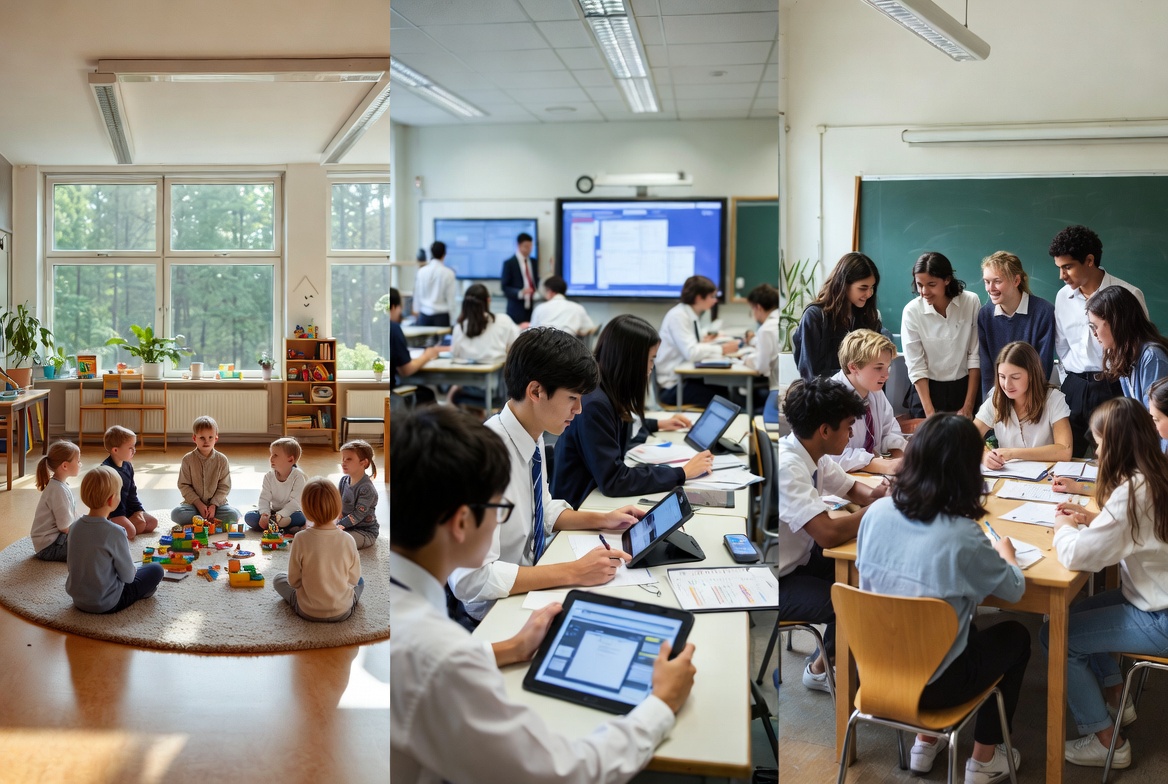
We often divide our lives into separate compartments, as if who we are at work bears no relation to who we are at home. Professional development becomes a matter of acquiring skills and credentials, while personal development concerns itself with relationships and inner peace. This division seems practical, even necessary, in a world that demands specialization. Yet it creates a fundamental problem: we cannot become excellent in one sphere while remaining underdeveloped in the other. Personal and professional development are not separate projects but aspects of a single process of becoming fully human.
The artificial separation between these domains creates people who succeed externally while feeling hollow internally, or who achieve inner peace while struggling to contribute meaningfully to the world. The executive who climbs the corporate ladder at the expense of family relationships discovers that professional achievement cannot compensate for personal failure. The seeker who withdraws from worldly engagement to pursue spiritual growth finds that inner development without outer expression leads to stagnation. Lasting fulfillment requires integration, the alignment of who we are with what we do.
Understanding how personal and professional development work together changes how we approach growth. We stop seeing our careers as mere sources of income and recognize them as contexts for character development. We stop seeing our inner lives as private indulgences and recognize them as foundations for sustainable achievement. This integrated perspective does not blur important distinctions but reveals hidden connections that make both forms of development more effective.
Understanding Personal Development
Personal development encompasses the cultivation of character, emotional intelligence, relationships, and inner life. It addresses questions of identity, purpose, values, and meaning. While this development happens in private spaces, its effects radiate outward into every aspect of existence.
At its core, personal development involves increasing self-awareness. We come to understand our patterns of thought and behavior, our emotional triggers, our strengths and limitations. This awareness is not merely intellectual but embodied; we feel our reactions in the moment rather than being controlled by them. The person who has developed self-awareness can notice when they are becoming defensive, when fear is driving their decisions, when old wounds are distorting present reality.
Personal development also involves clarifying values and living in alignment with them. Many people operate on autopilot, pursuing goals they have never examined, driven by desires they do not understand. Genuine development requires questioning these default settings, discerning what truly matters, and building a life that reflects those priorities. This is difficult work that often requires confronting uncomfortable truths and making hard choices.
The cultivation of emotional intelligence represents another crucial dimension. This includes the ability to recognize and regulate our own emotions, to empathize with others, to navigate conflict constructively, and to build meaningful relationships. These capacities are not luxuries but necessities for human flourishing. The person who lacks emotional intelligence may achieve professional success but will struggle to sustain it and enjoy it.
Understanding Professional Development
Professional development focuses on the knowledge, skills, and competencies required for career success. This includes technical expertise specific to a field, as well as transferable skills like communication, leadership, problem-solving, and project management. In a rapidly changing economy, continuous professional development has become essential for maintaining relevance and advancing in one’s career.
Technical skills form the foundation of professional competence. Whether one is a software engineer, a nurse, a teacher, or an accountant, mastery of the specific tools and knowledge of the field is non-negotiable. These skills are often measurable and certifiable, acquired through formal education, training programs, and on-the-job experience. The professional who neglects technical development soon finds themselves obsolete.
Yet technical skills alone are insufficient. The modern workplace demands what are often called soft skills, though they are anything but soft. The ability to communicate clearly, to collaborate effectively, to lead with vision and empathy, to adapt to changing circumstances—these determine whether technical expertise can be deployed successfully. A brilliant engineer who cannot work with others will accomplish less than a competent engineer who can build teams and inspire cooperation.
Professional development also involves understanding the broader context of one’s work. This includes industry trends, organizational dynamics, economic forces, and social implications. The narrow specialist who understands their domain deeply but misses the bigger picture makes decisions that may be technically correct but strategically wrong. Breadth of understanding complements depth of expertise.
Why the Two Must Work Together
The separation of personal and professional development creates a fundamental incoherence. We cannot be one person at work and a different person at home; the character traits that make us effective in one domain inevitably affect the other. The patience we cultivate in parenting serves us in management. The integrity we practice in business strengthens our personal relationships. The resilience we build through personal challenges enables us to navigate professional setbacks.
Consider emotional regulation. A leader who has not developed the capacity to manage their own emotions will make poor decisions under pressure, damage relationships with colleagues, and create toxic work environments. This is not a professional skill that can be learned in a workshop; it requires the kind of deep personal work that happens through reflection, feedback, and sometimes therapy. The professional skill depends on personal development.
Conversely, professional achievement can support personal growth. Meaningful work provides opportunities to develop discipline, to confront challenges, to receive feedback, and to contribute to something larger than oneself. The person who withdraws from professional engagement to focus solely on inner development misses these opportunities. Work becomes not an obstacle to growth but a context for it.
The integration of personal and professional development also addresses the problem of sustainability. Achievement built on neglect of health, relationships, or inner life eventually collapses. The executive who sacrifices everything for career success often faces burnout, health crises, or personal tragedy that undermines everything they have built. The integration of development ensures that success can be maintained and enjoyed over the long term.
Key Areas of Integrated Growth
Certain areas of development naturally bridge the personal and professional domains. Focusing on these creates synergies where growth in one area supports growth in the other.
Communication skills exemplify this integration. The ability to express oneself clearly, to listen deeply, to adapt one’s message to different audiences—these serve equally in professional presentations and intimate conversations. The person who develops authentic communication in their personal life brings that capacity to their work. The professional who learns to give effective feedback applies those skills in family relationships.
Resilience and stress management also bridge both worlds. Life inevitably brings challenges, disappointments, and setbacks. The capacity to recover from these, to maintain perspective, to continue moving forward—this determines whether we thrive or merely survive. Resilience is built through facing difficulties in any domain, and the strength developed in one area transfers to others.
Time management and prioritization represent another integrated skill. The ability to distinguish the important from the urgent, to allocate attention intentionally, to maintain boundaries—these serve both professional productivity and personal well-being. The person who learns to manage their energy and focus at work can apply those same skills to family life, hobbies, and self-care.
Ethical reasoning and integrity also unite the domains. The values we claim to hold are tested in the pressures of professional life. The person who compromises their integrity for career advancement discovers that this damage extends beyond work into their sense of self. Conversely, maintaining ethical standards in difficult professional situations strengthens character that serves all areas of life.
Practical Strategies for Dual Development
Integrating personal and professional development requires intentional strategies that honor both dimensions of growth.
Setting integrated goals represents a foundational practice. Rather than having separate goals for work and life, consider how professional objectives might support personal values, and how personal development might enable professional achievement. The goal of becoming a better listener, for example, serves both career advancement and relationship quality. The goal of maintaining physical health supports energy for work and presence for family.
Seeking feedback from multiple sources provides perspective that single-domain development misses. Professional feedback from colleagues and supervisors addresses work performance, but personal feedback from friends, family, or coaches reveals blind spots that affect both domains. The person who only receives professional feedback may develop technical excellence while remaining unaware of interpersonal patterns that limit their impact.
Creating reflective practices enables integration. Regular journaling, meditation, or conversation with trusted others creates space to process experiences, extract lessons, and maintain alignment between values and actions. These practices are often neglected in busy professional lives, yet they are essential for sustainable growth. Without reflection, we repeat patterns without learning from them.
Investing in development activities that serve both domains maximizes return on investment. A leadership program that addresses emotional intelligence serves professional advancement while supporting personal growth. A mindfulness practice that reduces stress improves both work performance and life satisfaction. The wise learner seeks these synergies rather than treating development as a zero-sum competition between domains.
The Long-Term Benefits of Holistic Growth
The integration of personal and professional development produces benefits that extend far beyond immediate achievement. These benefits compound over time, creating a foundation for a life that is both successful and meaningful.
Authenticity becomes possible when our inner and outer lives align. We no longer feel like impostors performing roles that do not reflect who we really are. This authenticity is palpable to others; it builds trust and enables genuine connection. The integrated person inspires confidence because their words and actions consistently reflect their values.
Sustainable success emerges from integrated development. The person who has built a strong inner foundation can weather professional setbacks without being destroyed by them. The person who has developed genuine competence can maintain achievement without the constant anxiety of impostor syndrome. Success built on integrated growth endures because it rests on solid ground.
Meaning and fulfillment become accessible when we stop compartmentalizing our lives. Work becomes not merely a means to an end but an expression of who we are and what we value. Personal life becomes not merely recovery from work but a source of energy and purpose. The integration allows us to bring our whole selves to everything we do.
Conclusion
Personal and professional development are not separate projects but aspects of a single journey toward becoming fully human. The skills and qualities that make us effective in our careers are the same ones that enable rich personal lives. The inner work that brings peace and meaning also brings resilience and clarity to professional challenges.
This integration does not mean that work should dominate life or that personal concerns should invade professional boundaries. It means recognizing that we are whole persons, and that development in any area affects our total functioning. The wise approach to growth honors this wholeness, seeking development that serves all aspects of life rather than sacrificing some for others.
In a world that often pressures us to choose between success and fulfillment, between achievement and relationships, between work and life, the integrated approach offers a different path. It suggests that these are false choices, that the deepest success includes fulfillment, that the strongest relationships support achievement, that work and life can be woven into a coherent whole. This integration is not easy, but it is the path to a life that is both productive and meaningful.
Frequently Asked Questions
How do I balance personal and professional development when I have limited time?
The key is to seek activities that serve both domains simultaneously. A leadership course that develops emotional intelligence serves professional advancement while supporting personal growth. Exercise improves physical health while increasing energy for work. Rather than seeing the two as competing for time, look for synergies where single investments serve multiple purposes.
Can professional success happen without personal development?
Professional success can occur without personal development, but it is rarely sustainable and never satisfying. The person who achieves externally while remaining underdeveloped internally often faces burnout, relationship failure, or a sense of emptiness. Lasting success requires the resilience, emotional intelligence, and values clarity that come from personal growth.
What comes first, personal or professional development?
There is no universal answer; different people may need to focus on different areas at different times. Someone early in their career may need to prioritize professional skill development to establish themselves. Someone experiencing personal crisis may need to focus on inner healing before pursuing ambitious professional goals. The key is to avoid neglecting either domain entirely for extended periods.
How do I know if my personal and professional lives are well-integrated?
Signs of healthy integration include: feeling authentic in both domains, experiencing energy rather than depletion, maintaining important relationships while achieving professional goals, and having a sense of coherence about your life direction. Warning signs of poor integration include: feeling like different people in different contexts, chronic exhaustion, relationship problems attributed to work, or success that feels hollow.
What are the most important skills that bridge personal and professional development?
Communication, emotional intelligence, resilience, time management, and ethical reasoning serve both domains powerfully. These are not technical skills but capacities that enable effectiveness in any context. Investing in these areas produces returns across all aspects of life, making them high-priority development targets.
How can organizations support integrated development?
Organizations can support integrated development by recognizing employees as whole persons, offering benefits that support life outside work, creating cultures that value authenticity, and providing development opportunities that address both technical and human skills. The most effective organizations understand that employees who thrive personally are more likely to contribute professionally.