When we think about education, the image that typically comes to mind involves classrooms, teachers, textbooks, and examinations. This is formal education, the most visible and structured type of learning. Yet this represents only one pathway to knowledge and growth. Throughout our lives, we learn in countless ways that never involve a school building or a certified instructor. Understanding the different types of education helps us recognize learning opportunities in every aspect of life and design our own paths to personal and professional development.
Education specialists generally recognize three main types: formal, non-formal, and informal. These categories are not rigid boundaries but rather points on a spectrum of learning experiences. They differ in their structure, setting, recognition, and purpose, yet all three contribute essential elements to a complete education. The person who relies solely on formal schooling misses the spontaneous learning that life offers, while the person who ignores formal education may lack credentials and systematic knowledge that open doors to opportunity.
Recognizing these different types matters because it expands our sense of what education can be. It helps parents support their children’s learning beyond homework and tests. It helps adults continue growing throughout their careers and lives. It helps organizations design training programs that actually work. Most importantly, it helps each of us take responsibility for our own learning, recognizing that education is not something that happens to us but something we actively pursue through multiple channels.
Formal Education: Structure and Credentials
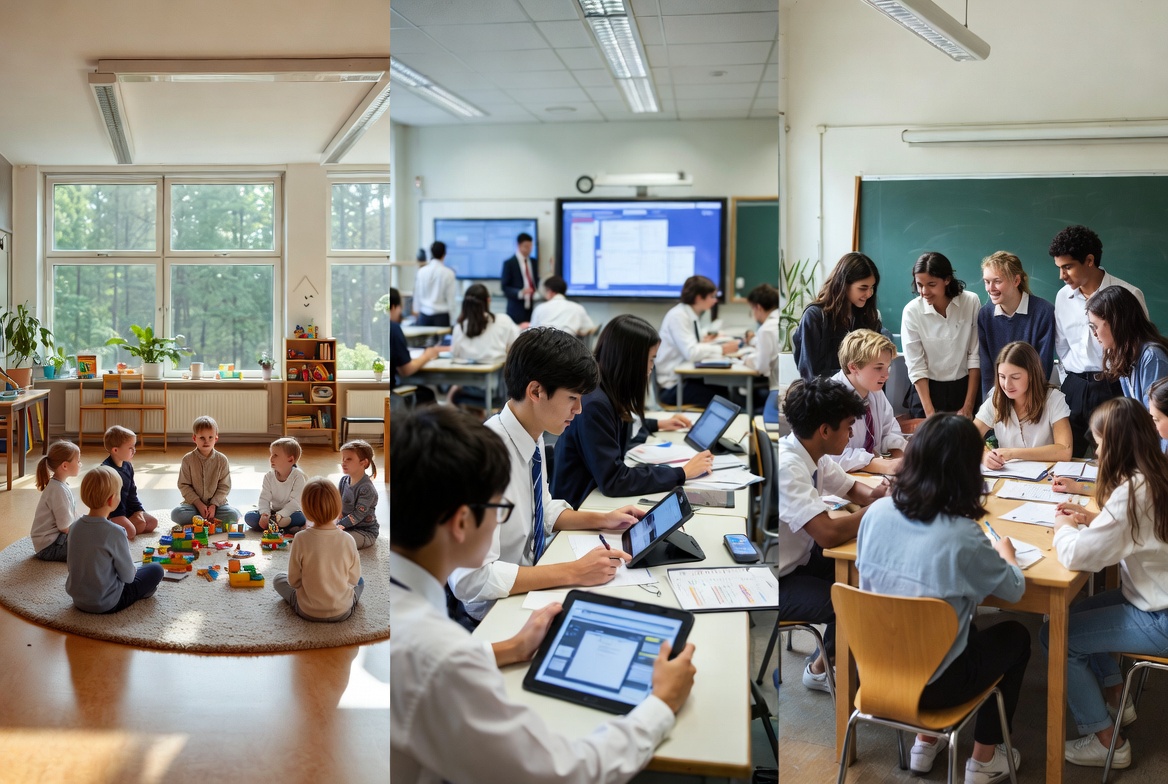
Formal education is what most people mean when they speak of being educated. It occurs within institutional settings like schools, colleges, and universities, following structured curricula that lead to recognized credentials. This type of education is hierarchical, sequential, and governed by established rules and standards. Students progress through levels—primary, secondary, tertiary—accumulating credits, grades, and degrees that certify their achievement.
The defining characteristic of formal education is its institutional framework. Governments establish education policies that determine when classes happen, what subjects are taught, and who must attend. Professional educators design curricula, deliver instruction, and assess learning through standardized methods. The entire system operates according to established procedures that ensure consistency and quality control across different locations and populations.
This structure provides significant advantages. Formal education offers systematic coverage of established knowledge, ensuring that learners encounter the foundations of various disciplines in logical sequence. It provides credentials that employers and institutions recognize, serving as signals of competence and commitment. It creates communities of learners who support and challenge one another. For many people, formal education represents their primary pathway to economic opportunity and social mobility.
Yet formal education also has limitations. Its very structure can become rigid, prioritizing compliance over creativity and standardized testing over genuine understanding. The focus on credentials can lead to credential inflation, where degrees become necessary for jobs that do not actually require them. The hierarchical nature can discourage self-directed learning, teaching students to wait for external direction rather than pursuing their own curiosity.
Non-Formal Education: Flexibility and Purpose
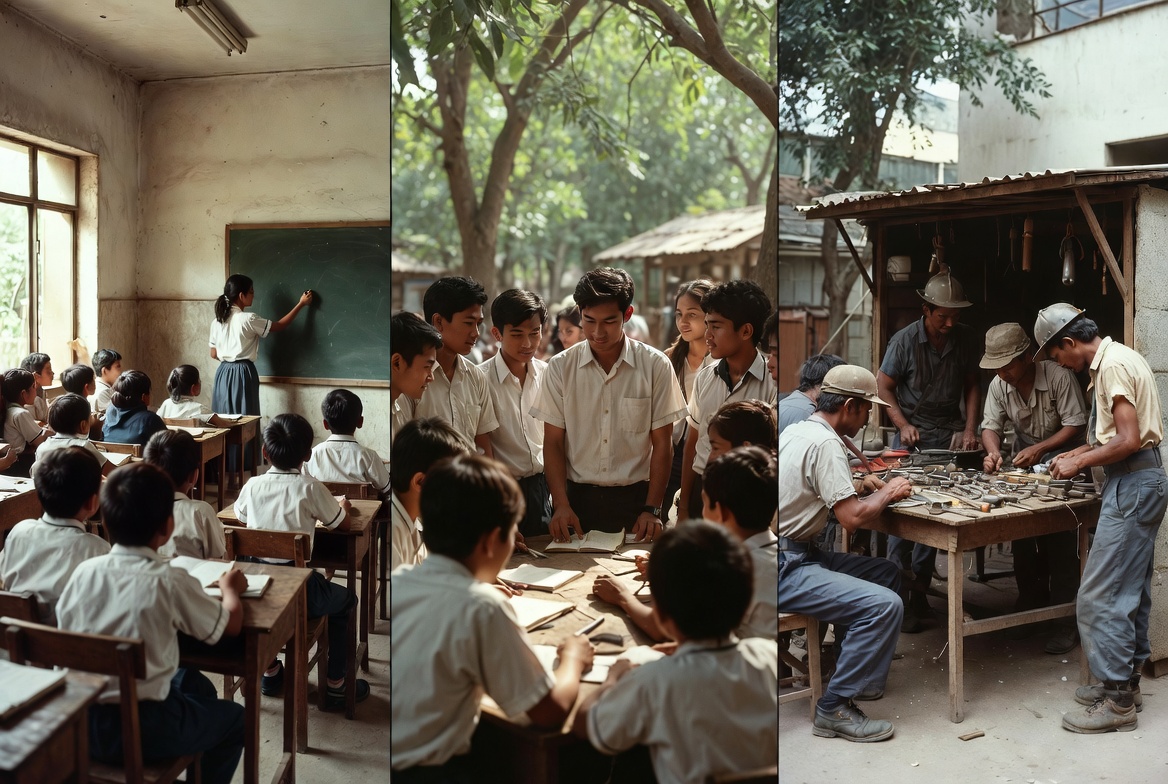
Non-formal education occupies the middle ground between the structure of formal schooling and the spontaneity of everyday learning. It is organized and intentional, like formal education, but it operates outside the traditional school system. Vocational training programs, professional development workshops, community courses, and online certifications all fall into this category.
What distinguishes non-formal education is its focus on specific, practical outcomes rather than broad intellectual development. A coding bootcamp teaches programming skills without requiring the general education courses of a computer science degree. A corporate training program develops leadership abilities relevant to particular organizational contexts. A community center offers language classes for travelers or cooking workshops for home chefs. Each of these addresses specific learning needs without the comprehensive scope of formal schooling.
Non-formal education is typically more flexible than formal education. Programs can be designed and modified quickly to respond to changing needs. Schedules can accommodate working adults with families. Methods can vary widely depending on the subject and learners, incorporating hands-on practice, peer collaboration, or self-paced modules. This flexibility makes non-formal education particularly valuable for adult learners who need targeted skill development.
The recognition of non-formal learning has grown significantly. Employers increasingly value certificates from reputable training programs alongside traditional degrees. Professional associations require continuing education that often takes non-formal forms. Online platforms have democratized access to structured learning outside traditional institutions. This evolution reflects a broader recognition that valuable learning happens in many settings beyond the schoolhouse.
Informal Education: Learning Through Life
Informal education encompasses all the learning that happens through daily experience, without intentional structure or institutional framework. Parents teaching children to cook, friends sharing knowledge about gardening, travelers learning navigation by getting lost and finding their way—all represent informal education. It is the most ubiquitous type of learning and often the most lasting.
The defining feature of informal education is its integration with life itself. We do not set aside specific times for informal learning; it happens while we are doing other things. We learn about child development by raising children, about business by starting businesses, about relationships by having them. This embeddedness makes informal learning highly relevant and immediately applicable. We learn what we need to know when we need to know it.
Informal education often proves more durable than formal learning because it is connected to genuine interests and real consequences. The person who learns a language through travel and conversation often retains it better than the person who studied it in school but never used it. The amateur astronomer who spends nights observing the sky develops deeper understanding than the student who memorized facts for an exam. When learning serves immediate purposes, it sticks.
Yet informal education also has limitations. Without structure, learners may miss foundational knowledge that would accelerate their progress. Without guidance, they may develop misconceptions or bad habits that become entrenched. Without community, they may lack the feedback and challenge that push understanding deeper. The most effective learners combine informal exploration with periodic engagement with formal or non-formal resources that provide structure and correction.
How the Three Types Work Together
These three types of education are not competitors but complements. The most effective educational experiences typically involve all three working in concert. Formal education provides foundation and credentials. Non-formal education develops specific skills and adapts to changing needs. Informal education maintains curiosity and connects learning to life.
Consider how a professional might develop throughout their career. Their formal education—degrees in their field—provides the theoretical foundation and entry credentials. Throughout their working life, they engage in non-formal learning: workshops on new technologies, certifications in emerging methods, professional development courses. Meanwhile, they learn informally through their daily work, solving problems, collaborating with colleagues, and reflecting on experience.
This integration matters because each type addresses different aspects of human development. Formal education cultivates systematic thinking and broad understanding. Non-formal education enables adaptation and specialization. Informal education maintains the joy of discovery and the connection between learning and living. Together, they support lifelong growth that neither formal schooling alone nor pure self-direction could achieve.
Choosing the Right Type for Your Goals
Understanding these different types helps us make better decisions about our own learning. Different goals require different approaches, and wise learners match their methods to their purposes.
If you need credentials to enter a profession, formal education is likely essential. The degree or certification serves as a necessary signal to employers and institutions. Even if you could learn the content through other means, the formal credential opens doors that would otherwise remain closed.
If you need specific skills for immediate application, non-formal education often provides the most efficient path. The focused, practical nature of training programs and workshops delivers relevant competence without the broader requirements of formal degrees. This is particularly true for technical skills that change rapidly, where formal curricula may lag behind current practice.
If you are pursuing knowledge for personal enrichment or exploring new interests, informal education may be most appropriate. Reading books, watching documentaries, engaging in hobbies, and conversing with knowledgeable people can provide rich learning without the costs and commitments of structured programs. Many people discover passions through informal exploration that later leads to more formal study.
The Future of Educational Types
The boundaries between these types of education are becoming increasingly fluid. Online learning platforms offer formal courses from accredited institutions alongside informal tutorials created by individuals. Micro-credentials and digital badges recognize learning that happens outside traditional degree programs. Employers are developing their own assessment methods that value demonstrated competence over institutional pedigree.
This evolution reflects a broader shift in how society values and recognizes learning. The twentieth century privileged formal education, treating degrees as the primary markers of qualification. The twenty-first century is developing more nuanced approaches that recognize multiple pathways to competence. This does not mean formal education is becoming obsolete, but rather that it is taking its place alongside other valuable forms of learning.
For individuals, this shift creates both opportunities and challenges. The opportunity is to design personalized learning pathways that combine the best of all three types. The challenge is to navigate a more complex landscape without the clear signals that traditional credentials once provided. Success requires not only learning but meta-learning—understanding how we learn best and making intentional choices about our educational investments.
Conclusion
The three types of education—formal, non-formal, and informal—each play essential roles in human development. Formal education provides structure, systematic knowledge, and recognized credentials. Non-formal education offers flexibility, practical focus, and responsive skill development. Informal education integrates learning with life, maintaining curiosity and connecting knowledge to experience.
Understanding these types helps us become more intentional learners. We can choose the appropriate type for our current goals, combine types for comprehensive development, and recognize learning opportunities in every aspect of life. We can support children’s education beyond the classroom, continue our own growth throughout adulthood, and contribute to communities of learning wherever we find them.
Education is not a single thing but a spectrum of experiences that shape who we become. The wise learner does not limit themselves to one type but draws on all three throughout their life. In doing so, they honor the fundamental truth that learning is not confined to institutions but is a natural human activity that can flourish anywhere we bring curiosity and commitment.
Frequently Asked Questions
What is the main difference between formal and informal education?
Formal education occurs within institutional settings with structured curricula, professional instructors, and recognized credentials. Informal education happens through daily life and experience without intentional structure or institutional framework. The key difference lies in organization and recognition: formal education is planned and certified, while informal education is spontaneous and uncredentialed.
Can non-formal education replace formal education?
Non-formal education can replace formal education for specific skill development but generally cannot replace it entirely. Many professions require formal credentials that only accredited institutions can provide. However, for practical skills and continuous learning, non-formal education often provides more efficient and flexible pathways than returning to formal schooling.
Which type of education is most effective?
No single type is universally most effective; each serves different purposes. Formal education excels at providing comprehensive foundations and recognized credentials. Non-formal education works best for targeted skill development. Informal education is most effective for maintaining lifelong curiosity and connecting learning to real life. The most effective approach typically combines all three types.
How can I document informal learning?
While informal learning does not produce traditional credentials, you can document it through portfolios, project demonstrations, and self-assessment. Some platforms now offer digital badges for informal learning achievements. When applying for opportunities, focus on demonstrating competence through work samples and practical examples rather than relying solely on formal credentials.
Do employers value non-formal and informal education?
Increasingly, yes. Many employers recognize that valuable skills develop through multiple pathways. They may value demonstrated competence, portfolios of work, and specific certifications alongside or instead of traditional degrees. However, this varies by industry and organization. Research your specific field to understand which credentials and demonstrations of learning carry weight.
How can parents support all three types of education for their children?
Parents support formal education by engaging with schools, monitoring progress, and creating conditions for academic success. They support non-formal education by enrolling children in extracurricular activities, camps, and workshops that develop specific interests. They support informal education most powerfully through example—demonstrating curiosity, reading, discussing ideas, and treating everyday experiences as learning opportunities.